Understanding React: The Future of Conversational AI

Introduction to React

React is a relatively new concept in the field of conversational AI, referring to the ability of a system to respond to user input in a more human-like way. Conversational AI has evolved significantly over the years, and React is at the forefront of this evolution. It involves not just understanding the user's input but also being able to respond in a contextually relevant manner.
The role of React in conversational AI is multifaceted. It enables systems to engage in more natural-sounding conversations, improving user experience. This is achieved through advanced algorithms that can understand nuances in language and respond appropriately. As a result, React is becoming increasingly important in the development of chatbots, virtual assistants, and other conversational interfaces.
The growing importance of React can be seen in its adoption across various industries. Companies are leveraging React to create more intuitive and engaging user interfaces.
- Enhanced customer service through more responsive chatbots
- Improved user engagement in virtual assistants
- Better personalization in conversational systems
are some of the benefits driving its adoption.
How React Works
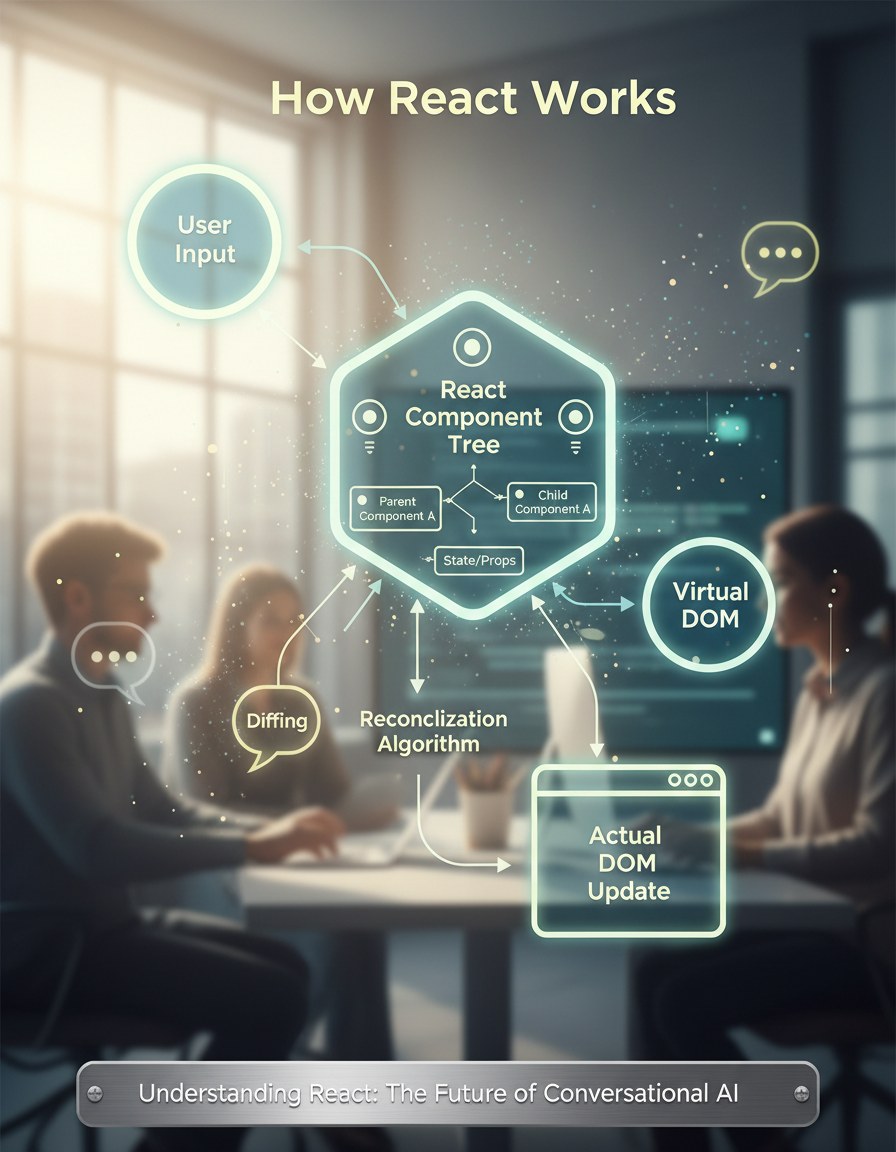
React's ability to facilitate conversational interactions is rooted in its core technology, which combines advanced natural language processing (NLP) and machine learning algorithms. At its core, React utilizes a sophisticated NLP engine to understand and interpret user inputs, whether they are voice commands or text-based queries.
The technology supports both voice and talk interfaces, allowing users to interact with React through various channels, including voice assistants and chat platforms. This is made possible by React's integration with voice recognition technology, enabling it to accurately capture and process spoken language.
Furthermore, React's agent capabilities are designed to simulate human-like conversations by leveraging a vast knowledge base and contextual understanding. This enables React to respond to user queries in a relevant and personalized manner, creating a more engaging and effective conversational experience.
- Advanced NLP for understanding user inputs
- Integration with voice recognition technology for voice interfaces
- Agent capabilities for simulating human-like conversations
React as a Companion
React can be utilized to create a digital companion that understands and responds to user queries, providing a more personalized and engaging user experience. A digital companion powered by React can be designed to offer various features such as emotional support, personalized recommendations, and assistance with daily tasks. To achieve this, React's capabilities can be leveraged to facilitate user interaction through natural language processing and machine learning algorithms, enabling the companion to comprehend user intent and respond accordingly.
Key features of such a companion include the ability to learn from user interactions, adapt to their preferences, and provide relevant information or support. For instance, a React-powered companion can be trained to recognize user emotions and respond with empathy or suggestions to alleviate their concerns. Moreover, it can offer personalized recommendations based on user behavior and preferences, enhancing the overall user experience.
- Understanding user queries through natural language processing
- Providing personalized support and recommendations
- Learning from user interactions to improve responses
Automation with React
React's capabilities extend far beyond simple conversation automation, enabling businesses to streamline complex workflows and tasks. By leveraging React's automation features, organizations can achieve significant efficiency gains, reducing the time and resources required to complete tasks. One of the primary ways React achieves this is through task automation, where repetitive and mundane tasks are handled by the AI, freeing up human resources for more strategic and creative work.
Industry use cases for React's automation capabilities are diverse and widespread. For example, in customer service, React can be used to automate routine inquiries and support requests, allowing human customer support agents to focus on more complex issues. In addition, React can be applied in industries such as finance and healthcare, where it can help automate tasks such as data entry, document processing, and appointment scheduling.
- Automating routine tasks and inquiries
- Streamlining workflows and processes
- Improving efficiency and productivity
By automating tasks and workflows, React enables businesses to operate more efficiently, improve customer satisfaction, and reduce costs.
Future of React
The future of React is poised to be shaped by emerging trends in conversational AI, particularly advancements in voice UI. As voice technology continues to evolve, React is likely to become an even more integral part of our daily interactions with technology. Voice UI advancements will enable more seamless and natural conversations between humans and machines, opening up new possibilities for React's applications.
Some potential developments in React technology include the integration of more sophisticated natural language processing capabilities, allowing for more nuanced and context-aware conversations. This could have a significant impact on industries such as customer service, where React-powered chatbots and virtual assistants could become increasingly prevalent. Industries such as healthcare and finance may also benefit from the use of React in automating routine tasks and providing personalized support.
- More advanced voice UI capabilities
- Increased adoption in industries such as customer service and healthcare
- Further integration with other AI technologies
As React continues to evolve, it is likely to have a profound impact on the way we interact with technology, and the industries that rely on it.